Posts

Showing posts with the label Food safety

What is the importance of studying Food Microbiology?
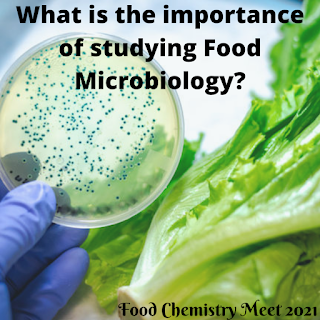
Image
  What is the importance of studying Food Microbiology? Foods can be considered as a medium for microbial  growth . Considering the vast array of sources, substances, and methods with which food is produced, practically every kind of microbe is a potential contaminant. Given a chance to grow, microbes will produce changes in appearance, flavour, odour, and other qualities of the food. The changes vary according to the type of food degraded but can be summarized by examining the fates of the major nutrients found in food: proteins, carbohydrates, and fats. Improperly canned foods are also subject to spoilage by bacteria, yeasts, and molds. Bacteria such as Bacillus and Clostridium are of particular significance in the canning industry because of the high level of resistance that their spores possess. One example of microbial spoilage of canned foods is “sulfide spoilage” caused by C. nigrificans, in which contents are blackened and have the odour of rotten eggs . Another exam...

What is the differences between Nutrition and Food Science?

Image
  Nutrition considers topics such as   mal nutrition, obesity nutritional deficiencies, and food insecurity. In comparison, Food Science considers biological, chemical and physical properties of food in relation to, processing, storage of food products and manufacturing. Whereas  food science studied and they usually be food Scientists. Who study about the nutrition in  food called Nutritionist. But both will work on the food and the nutrition to get to the human body. Food scientists work to improve all aspects of the food industry  from consumption to production. Some food scientists specialize in a specific area, such as  agriculture, packaging or quality assurance for production facilities. Work environments may change depending on the project in our hand. Some food scientists travel to production facilities and farms, while others work importantly in a laboratory. Employment in the field requires at least a bachelor's degree for on-the-job training ...

How is Nanotechnology used in the Food Industry?

Image
Nanotechnology gives an opportunity to develop and apply novel structures or systems with different properties in agriculture, food, and medicine industries. Nanotechnology can bring about a great difference in Food Quality and Food Safety and the health benefits the food delivers, which   also enhanced functional properties and ensure consumers accept food’s Nanotechnology applications in food industry  can be utilize to detect bacteria in packaging or produce stronger color quality, flavors, and safety by increase the barrier properties. Nanotechnology hold great promise to provide benefits not just within food products but around food products. The most common used Nanoparticle is titanium dioxide in foods. It's used to make foods such as coconut flakes, yogurt look as white as possible, provide opacity to other food coloring  and prevent caking. Nano encapsulation of   Food Sensory Quality: Sensory quality of food ...